Illustrative scene, AI-generated
Retail media network (RMN)
Run a retail media network your advertisers can check
Sell your store screens to the brands on your shelves. Wyndlass books campaigns against forecast availability, decides each ad slot at play time and reports what screens actually played, within the permissions and approvals you set.
The challenge
Selling screen time takes more than a schedule
Brands buy goals, not loops. A retail media network has to promise what it can deliver, deliver it, and show its work.
Promises nobody has checked
Sales commits to plays before anyone knows whether the screens have room for them.
Plans that can’t catch up
A schedule fixed days ahead has no way to recover when a campaign falls behind.
Advertisers want proof
Brands expect to see where and when their ads ran, not an estimate.
Rivals back to back
Two competing brands in a row on the same screen is a complaint from both.
Sell
Sell only what you can deliver
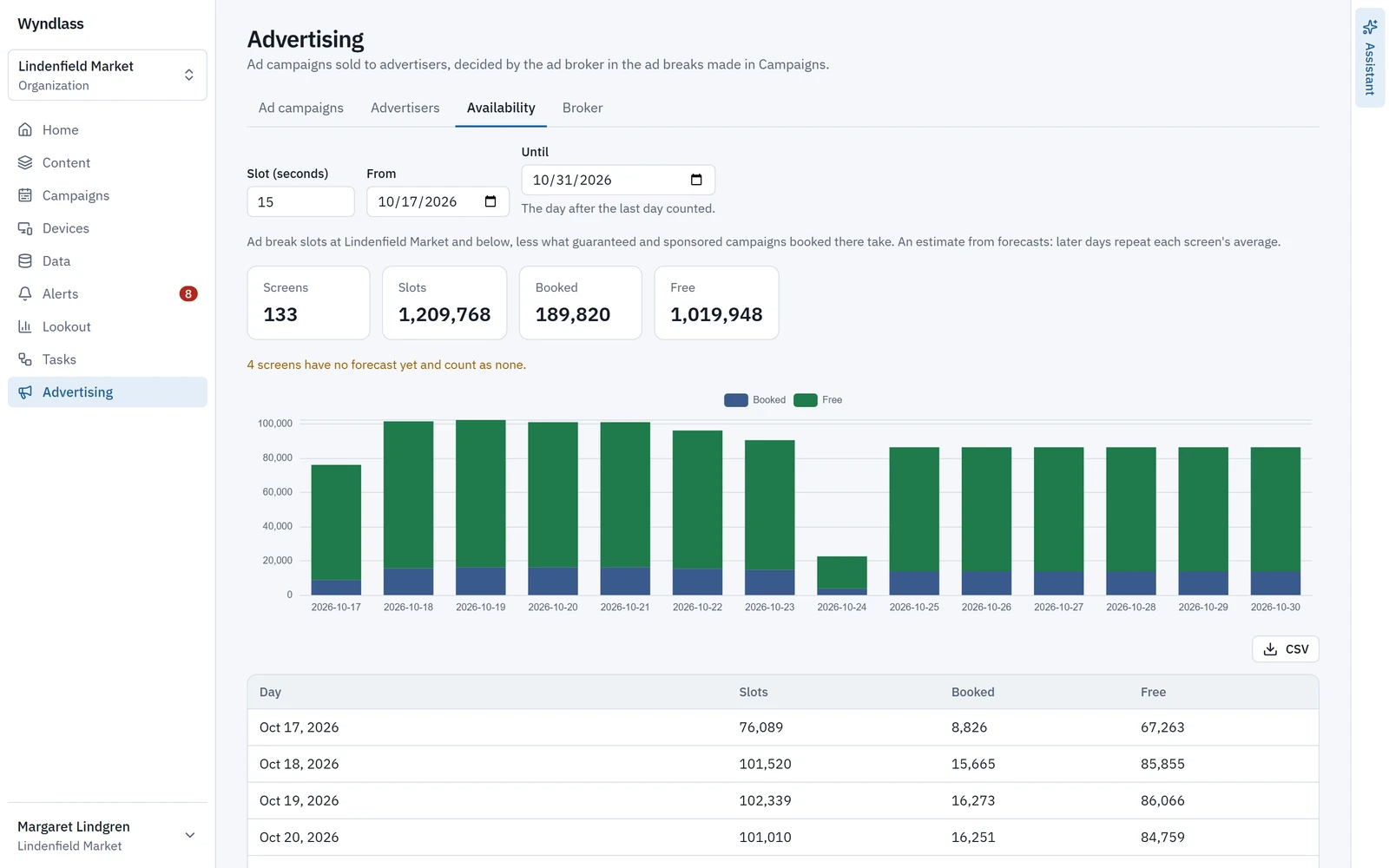
Availability shows free slots of a given length by day, booked against free, so sales can quote from a forecast. A guaranteed campaign is checked against forecast availability before it is booked.
- Sell sponsorships, guaranteed campaigns and other direct-sold campaigns, with slots from 5 to 120 seconds.
- Price per thousand plays, per thousand impressions, or a flat fee.
- Set a goal in plays, impressions or a share.
- Availability is labelled as an estimate, because it is one.
An admin can overbook, but only after a second preview.
Deliver
Every ad slot decided at play time
Add an Ad break tier to any campaign plan. Players ask for each slot about 30 seconds ahead, so what plays follows pacing, not a schedule fixed days before.
- Sponsorships play first, then guaranteed campaigns behind pace, then other direct-sold campaigns by price.
- House content fills any slot no ad takes.
- Advertiser categories keep competitors apart.
The order is fixed and visible: broker statistics show decisions by source and why slots went unfilled.
Prove
Reports built on what screens played
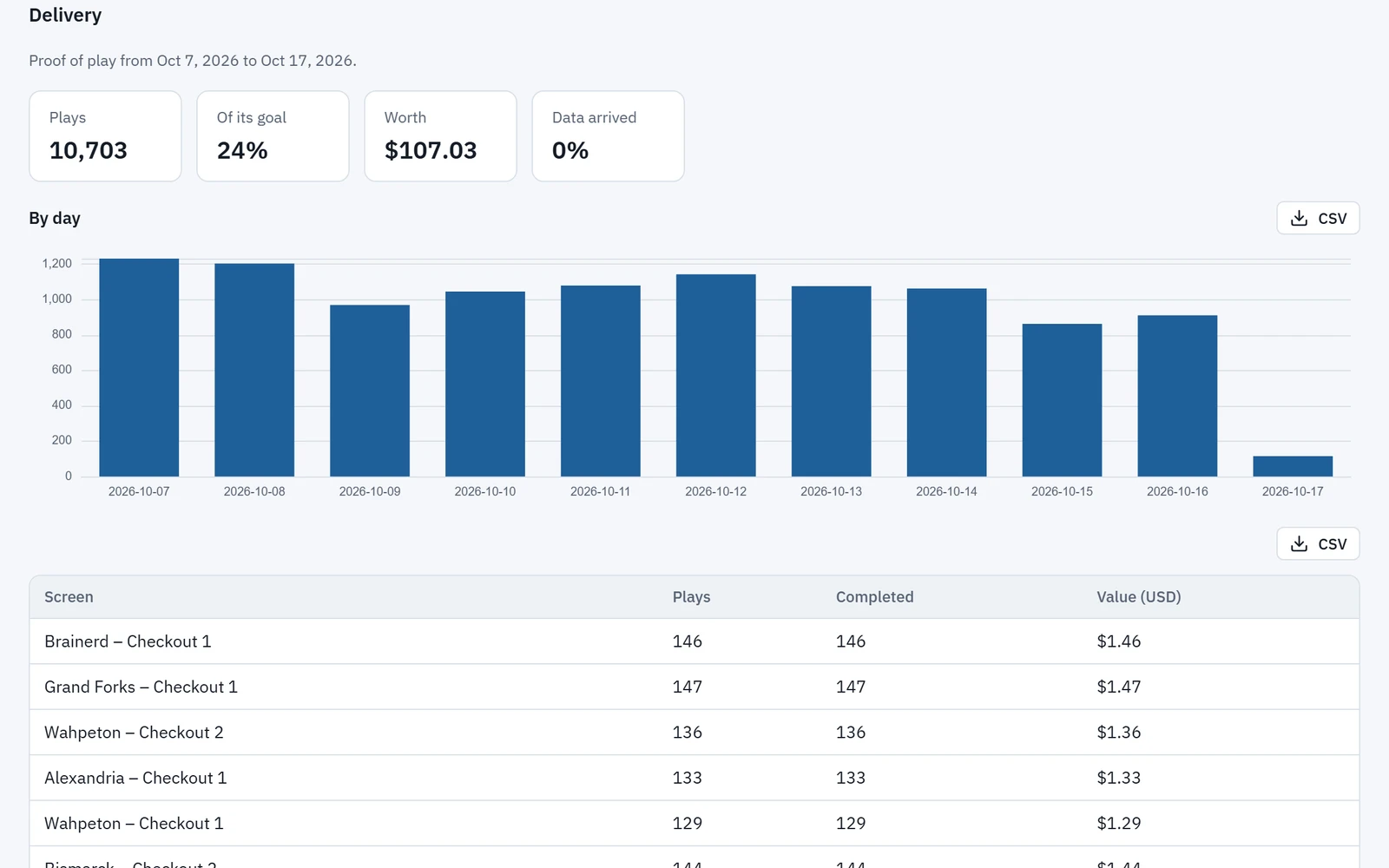
Delivery reports show plays, share of goal, value and data completeness, by day, screen, site and creative. They rest on proof of play from Lookout, Wyndlass’s network analytics: what screens reported playing, never an estimate.
- Each play is chained to the one before it, so a gap or an edit shows.
- Impressions sit beside plays where screens measure people.
- CSV for every table, and scheduled delivery reports by email or webhook.
Every report says how complete its data is, so a gap never reads as a result.
AI tools
Answer a brand’s brief in a sentence
Connect an AI tool over MCP (Model Context Protocol), and your sales team can ask it to check availability, draft ad campaigns and pull delivery reports.
- The advertising toolset covers advertisers, ad campaigns, availability, booking against forecasts and delivery reports.
- The person connecting picks which toolsets the tool may use.
- AI helps your team sell and report. Which ad plays stays with pacing and price.
The tool has only that person’s permissions. Booking is previewed first, approval policies can hold it, and every action is audited.
You
A snack brand wants 15-second spots on checkout screens in our Midwest stores through March. How many plays can we promise?
AI tool
Those screens have about 640,000 free 15-second slots in March, as a forecast estimate, so a guaranteed goal of 500,000 plays fits. I’ve saved a draft for the snack brand. Booking it shows you a preview first.
- Midwest checkouts
- 500,000 plays
- Draft saved
Booking
You confirmed the preview. Booked, and recorded in the audit log.
Across the store
Sell every zone on its own terms
Ad breaks run only where you add them, so each zone can have its own slot length.
Entrances and windows
Sponsorships and seasonal campaigns, as shoppers arrive.
Aisle ends and shelves
A brand’s ad beside its own category.
Checkouts and queues
Short spots for shoppers who are waiting.
Cafés and counters
Ad breaks between your own menus and offers.
Back of house
No ad break, no ads: staff screens stay out of your inventory.
Brand-safe by design
Controls your advertisers can rely on
The same controls that govern your people govern every AI tool.
Creative review
Hold new creatives until someone who may publish approves them. Nothing held plays anywhere.
An Ad sales role
Grant it at the places a team sells. It covers advertisers and ad campaigns, not your store screens.
Approvals for bookings
Policies can hold a booking for approval, and nobody approves their own change.
A full audit trail, and undo
See every change by people and AI, with who did it and why, and undo recent ones in one click.
Retail media networks: common questions
What is a retail media network (RMN)?
A retail media network sells advertising to brands across a retailer’s own channels. Wyndlass runs the in-store side: selling time on your screens, playing it to each campaign’s goal and reporting what played.
How do we get the media owner add-on?
Wyndlass support turns it on for your organization. Talk to us about your network.
Does AI decide which ad plays?
No. Each slot follows a fixed order of sponsorships, guaranteed campaigns behind pace, other direct-sold campaigns by price, then house content. AI tools help your team check availability, draft campaigns and pull reports.
How do advertisers see their results?
You share them. Delivery reports export to CSV, and a task can send them on a schedule by email or webhook.
Can we sell by impressions?
Yes, with a price per thousand impressions or an impressions goal, on screens that measure people. Those campaigns play only on screens that measure.
Are the screens watching shoppers?
Only where audience measurement is turned on. It is off until a person turns it on for a site and confirms the site shows a notice. Each image is analysed on the player and discarded at once, only counts leave the screen, and there is no facial recognition or identification.
Build your retail media network on Wyndlass
Access is by invitation during launch. Tell us about your network and we will reply by email.